What Your Pharmacy Receipt Is Actually Telling You — And How to Use It to Stop Overpaying
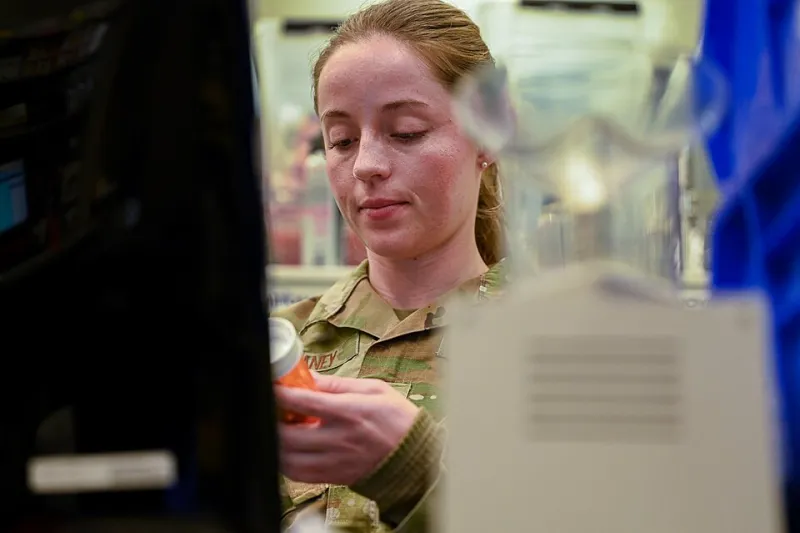
Photo: U.S. Space Force photo by Tech. Sgt. Jordan Thompson, Public domain, via Wikimedia Commons
Most Americans glance at their pharmacy receipt and pocket it without a second thought. The total is what it is, right? Not quite. Buried in that small printout are line items, fee structures, and pricing signals that can tell a very different story — one that, once understood, may put real money back in your pocket.
At USaverX, our mission is to help consumers navigate the often opaque world of prescription pricing. Decoding your pharmacy receipt is one of the most direct ways to take control of that process.
The Anatomy of a Pharmacy Receipt
A standard pharmacy receipt is not simply a record of what you paid. It is a compressed summary of a multilayered transaction involving your insurer, a pharmacy benefit manager (PBM), the dispensing pharmacy, and the drug manufacturer. Understanding what each section represents is the first step toward identifying irregularities.
Drug Acquisition Cost (Ingredient Cost): This is the price the pharmacy paid — or claims to have paid — for the raw medication. It is typically benchmarked against published price lists such as the Average Wholesale Price (AWP) or the National Average Drug Acquisition Cost (NADAC). If your receipt lists an ingredient cost, you can cross-reference it against the NADAC database maintained by the Centers for Medicare and Medicaid Services (CMS), which is publicly available online. A significant discrepancy between the two figures warrants further inquiry.
Dispensing Fee: This is the flat charge a pharmacy adds for the act of filling your prescription — essentially, compensation for the pharmacist's professional services. Dispensing fees typically range from $1 to $15 depending on the pharmacy type and your insurance plan's negotiated rate. If you are paying cash, some pharmacies apply a higher dispensing fee than they would under an insurance contract. Ask directly what the dispensing fee is before you pay.
Plan Paid vs. Member Responsibility: For insured patients, receipts often show what your insurance plan covered alongside your out-of-pocket share. Pay close attention to the total billed amount versus what was actually paid. In some cases, the total billed to the insurer exceeds what you would have paid using a discount program — a phenomenon known as a "clawback," where your copay is actually higher than the cash price of the drug.
Step-by-Step: Comparing Receipts Across Pharmacies
One of the most effective strategies for spotting overcharges is simple cross-referencing. Here is how to do it systematically:
-
Request an itemized receipt at every pharmacy. Not all pharmacies provide full itemization by default. You are legally entitled to this information — do not hesitate to ask.
-
Record the ingredient cost, dispensing fee, and total for the same medication at two or three pharmacies. Use tools like GoodRx, the USaverX comparison platform, or your state's pharmacy price transparency portal to establish a pricing baseline.
-
Note the NDC (National Drug Code). This eleven-digit number on your receipt identifies the exact drug, manufacturer, and package size. When comparing prices, ensure you are comparing identical NDC codes — a different manufacturer's generic can have a meaningfully different cost structure.
-
Track pricing over time. Drug prices fluctuate. A price that seemed reasonable six months ago may now be above market. Keep a folder — physical or digital — of your receipts for recurring prescriptions.
Red Flags That Signal a Potential Overcharge
Not every pricing anomaly is the result of error or bad faith, but certain patterns are worth investigating:
-
Your copay exceeds the cash price of the drug. This is the clawback scenario mentioned above. If a medication costs $8 cash and your copay is $15, you may be paying more than necessary. Some states have passed laws prohibiting pharmacists from being barred from telling you about lower cash prices — ask explicitly.
-
The ingredient cost on your receipt is significantly higher than the NADAC figure. A modest markup is standard practice; a markup of 200% or more on a common generic is not.
-
Duplicate dispensing fees. If you fill a 90-day supply and notice two dispensing fees on one receipt, that is an error worth disputing immediately.
-
Brand-name pricing applied to a generic. Occasionally, a dispensing system error results in a generic being billed at the brand-name rate. Confirm the NDC on your receipt matches the generic version of your medication.
When and How to Escalate
If you identify a discrepancy, start with the pharmacy manager. Request a printed explanation of every charge on your receipt. Most legitimate errors are corrected quickly at this level.
If the pharmacy is unresponsive or the issue appears systemic, your next step is your state's Board of Pharmacy. Every state maintains a regulatory body that oversees pharmacy billing practices, and formal complaints are taken seriously. You can locate your state board through the National Association of Boards of Pharmacy (NABP) website.
For insurance-related billing disputes — particularly if you suspect your PBM is involved in inflated pricing — file a complaint with your state's Department of Insurance. Federal employees covered under FEHB plans have additional avenues through the Office of Personnel Management.
Turning a Receipt Into a Cost-Control Tool
The pharmacy receipt is not a passive document. Treated as a data source, it becomes one of the most actionable pieces of paper in your healthcare file. By understanding ingredient costs, scrutinizing dispensing fees, and comparing totals across providers, you convert a transaction summary into a negotiating instrument.
USaverX exists precisely to support this kind of informed consumer behavior. Use our platform to benchmark prices before you fill, not after. Arrive at the pharmacy counter already knowing what a fair price looks like — and equipped with the knowledge to recognize when the receipt in your hand does not match it.