Five Generic Drug Myths That Are Quietly Draining Your Wallet

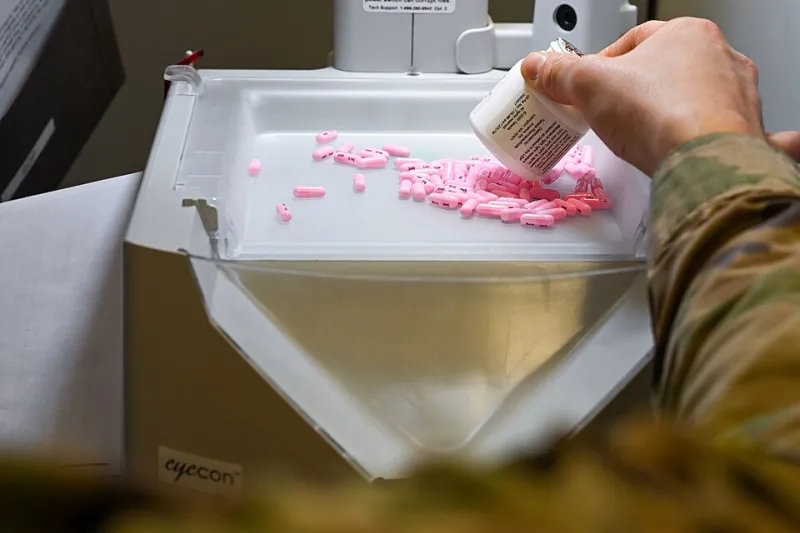
Photo: ctsnow, CC BY 2.0, via Wikimedia Commons
The United States spends more on prescription medications per capita than any other developed nation. Yet one of the most reliable tools for reducing that burden — generic drugs — remains chronically underutilized, largely due to misconceptions that have persisted for decades despite overwhelming scientific evidence to the contrary.
Generics currently account for roughly 90 percent of all prescriptions dispensed in the U.S., according to the FDA, and they save the American healthcare system an estimated $373 billion annually. Still, a meaningful segment of patients continues to request or accept brand-name drugs when a generic equivalent is available — often at a cost difference of 50 to 90 percent. The reasons are almost always rooted in myth rather than medicine.
At USaverX, we take the position that accurate information is as valuable as any coupon or discount program. So let us address five of the most stubborn misconceptions about generic medications, one by one.
Myth #1: "Generics Are Lower Quality Than Brand-Name Drugs"
This is, without question, the most pervasive misconception in consumer pharmacy. The belief that a lower price signals a lower-quality product is intuitive in most retail contexts — but it does not apply to FDA-regulated pharmaceuticals.
The FDA requires that generic drugs demonstrate bioequivalence to their brand-name counterparts. This means the generic must deliver the same active ingredient, in the same dosage form and strength, at a rate of absorption that falls within an approved equivalence range — typically 80 to 125 percent of the brand's performance, a standard the FDA has determined to be clinically insignificant for the vast majority of patients.
Generics may use different inactive ingredients — fillers, dyes, coatings — but these components do not affect therapeutic outcome. The manufacturing facilities producing generics are subject to the same FDA inspection standards as brand-name manufacturers. In fact, a significant proportion of generic drugs are manufactured in the same facilities as their branded counterparts, sometimes by the same companies.
"The science behind generic approval is rigorous," noted one clinical pharmacist at a major hospital system in the Midwest. "When patients tell me they don't trust generics, I ask them if they'd pay triple the price for a gallon of store-brand milk if the dairy was the same. Usually, that reframes it."
Myth #2: "My Doctor Prescribed the Brand Name, So That's What I Need"
This myth is less about distrust and more about deference — and it is entirely understandable. Physicians are trusted authorities, and when a prescription is written for a specific brand, patients naturally assume it reflects a clinical judgment.
In reality, physicians often default to brand-name prescribing for reasons that have little to do with therapeutic superiority. Heavy pharmaceutical marketing to prescribers — a practice that, while more regulated than it once was, still influences prescribing habits — plays a documented role. Familiarity also matters: physicians prescribe what they know, and brand names are what they learned in training and encountered in promotional materials.
The good news is that most states have laws permitting pharmacists to substitute an FDA-approved generic unless the prescriber explicitly writes "dispense as written" on the prescription. If you receive a brand-name prescription, ask your pharmacist whether a generic equivalent is available and whether substitution is permitted. You can also ask your physician directly — most are receptive when cost is a concern, and many simply did not consider the generic alternative at the time of prescribing.
Myth #3: "Generics Take Longer to Work"
This belief is perhaps the most medically unfounded on this list, yet it surfaces frequently in patient conversations and online health forums. The idea that a generic drug "takes longer to kick in" or "wears off faster" than a brand-name version is not supported by clinical evidence.
As established above, FDA bioequivalence standards ensure that generics are absorbed at a comparable rate and to a comparable extent as the reference brand. Differences in absorption that fall within the accepted range have not been shown to produce meaningful differences in clinical outcomes for the overwhelming majority of drug categories.
There are narrow exceptions — certain medications with a "narrow therapeutic index," such as some anticoagulants, antiepileptics, and thyroid hormones, require more careful monitoring when switching formulations. For these specific drug classes, a conversation with your physician or pharmacist is warranted. But for the broad majority of commonly prescribed medications — including statins, ACE inhibitors, antidepressants, and diabetes drugs — the timing and duration of effect are clinically equivalent.
Myth #4: "I Tried a Generic Once and It Didn't Work as Well"
Personal experience is a powerful persuader, and dismissing a patient's subjective perception is neither kind nor productive. However, the nocebo effect — the phenomenon by which negative expectations produce negative perceived outcomes — is a well-documented and clinically relevant phenomenon in pharmaceutical research.
A 2013 study published in the journal Translational Psychiatry found that patients who were told they were receiving a generic version of a medication reported lower satisfaction and perceived efficacy compared to patients told they were receiving the brand-name version — even when both groups received identical pills. The difference was entirely psychological.
This does not mean patients who feel differently on a generic are imagining things. Inactive ingredient differences can, in rare cases, cause tolerability issues in individuals with specific sensitivities or allergies. If this occurs, a different generic manufacturer's version of the same drug — or a conversation with your pharmacist about formulation differences — can often resolve the issue. The solution is not necessarily reverting to a brand-name product at significantly higher cost.
Myth #5: "The Savings Aren't That Significant"
Perhaps the most consequential myth of all, because it leads patients to forgo savings without fully understanding what they are leaving behind.
Consider the numbers. The average brand-name drug costs an American patient $341 per month, according to data from the AARP Public Policy Institute. The average generic equivalent costs approximately $32. For a patient managing a chronic condition — hypertension, high cholesterol, type 2 diabetes, depression — who takes one or more medications daily, the annual difference between brand and generic can easily exceed $3,000.
Across a patient population, these figures become staggering. The FDA estimates that generic drugs saved the U.S. healthcare system $373 billion in 2019 alone. For individual consumers, the calculation is equally compelling: switching a single brand-name medication to its generic equivalent, where available, can reduce annual medication costs by 50 to 90 percent.
At USaverX, our tools are designed to surface these savings opportunities in real time, comparing prices across pharmacies and identifying generic availability so that the decision is never left to chance or assumption.
The Bottom Line on Generics
The evidence in favor of generic medications is not ambiguous. It is extensive, well-replicated, and endorsed by every major regulatory and medical authority in the United States, including the FDA, the American Medical Association, and the American Pharmacists Association.
The myths that persist around generics are not the result of bad science — they are the result of incomplete information, marketing influence, and the very human tendency to equate price with quality. Addressing them is not just an academic exercise; it is a practical path to meaningful financial relief for American households already stretched thin by healthcare costs.
If you are currently filling one or more brand-name prescriptions, the most valuable step you can take today is a simple conversation: ask your pharmacist whether an FDA-approved generic equivalent is available for each of your medications. Then use a trusted comparison resource to find where that generic is priced most competitively near you.
Smart healthcare spending does not require sacrificing quality. It requires accurate information — and the willingness to ask the right questions.