Same Pill, Wildly Different Price Tags: What's Really Driving the Cost Gap Between Pharmacies
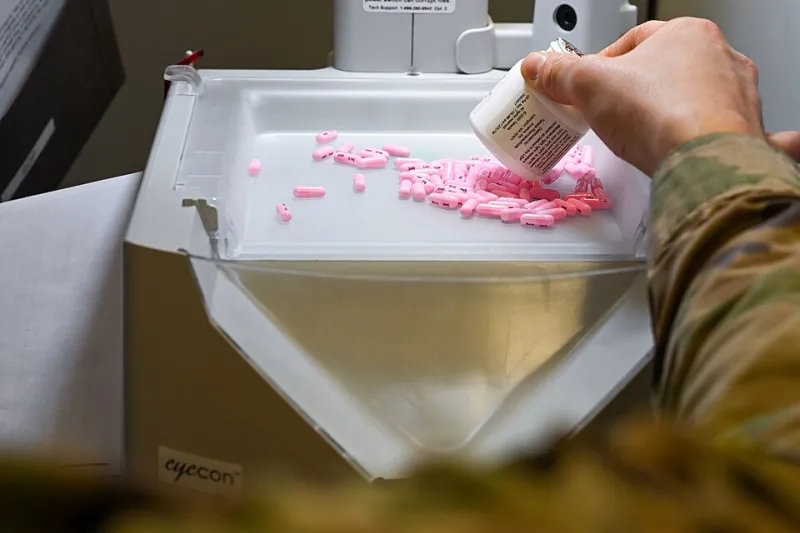
Photo: U.S. Air Force photo by Senior Airman Jessica Sanchez-Chen, Public domain, via Wikimedia Commons
Imagine picking up a prescription for lisinopril — one of the most commonly dispensed medications in the United States — and paying $14 at a neighborhood independent pharmacy. Now imagine your neighbor, with the same prescription, paying $127 for the identical drug at a major chain just down the street. No difference in manufacturer. No difference in dosage. No difference in the pill itself. Just a staggering difference in price.
This is not a hypothetical scenario. It is a routine reality for millions of Americans, and it stems from one of the most convoluted pricing structures in any consumer industry. At USaverX, we believe informed consumers are empowered consumers. So let us walk through exactly how this happens — and what you can do about it.
The Supply Chain Nobody Talks About
Most people assume a medication's price is determined by the manufacturer. In reality, by the time a drug reaches your hands, it has passed through a web of intermediaries, each of whom extracts a margin along the way.
Pharmaceutical manufacturers set a list price — often called the Wholesale Acquisition Cost, or WAC. Drug wholesalers, such as McKesson, AmerisourceBergen, and Cardinal Health, then negotiate purchase terms with manufacturers and distribute medications to retail pharmacies. Pharmacies, in turn, mark up the acquisition cost to cover overhead, staffing, and profit. But this is only half the story.
The other half involves Pharmacy Benefit Managers, or PBMs — entities like Express Scripts, CVS Caremark, and OptumRx. PBMs act as intermediaries between insurance companies and pharmacies, negotiating reimbursement rates and determining which drugs appear on insurance formularies. Here is where pricing becomes genuinely opaque: PBMs negotiate rebates directly with manufacturers, but those savings are not always passed on to patients. Instead, they may be retained by the PBM or shared with the insurer, while the consumer continues paying elevated out-of-pocket costs.
Why Chain Pharmacies and Independents Price So Differently
Large pharmacy chains — CVS, Walgreens, Rite Aid — have enormous purchasing power, which might lead you to expect lower prices. Paradoxically, that is not always the outcome at the point of sale.
Chain pharmacies operate under complex agreements with PBMs that set reimbursement floors and influence retail pricing. Their overhead costs are also substantially higher: prime real estate locations, large staff complements, and corporate administrative expenses all factor into the margin they need to maintain. Additionally, chain pharmacies often default to billing insurance rather than offering competitive cash prices, which can actually result in a higher cost for patients with high-deductible plans or those paying out of pocket.
Independent pharmacies, by contrast, frequently have more flexibility in their pricing structures. With lower overhead and a stronger incentive to retain community customers, many independents actively work to offer competitive cash prices — sometimes dramatically lower than what a chain would charge. A 2022 analysis by the National Community Pharmacists Association found that independent pharmacies often undercut chain prices on generic medications by 20 to 40 percent.
Warehouse retailers such as Costco and Sam's Club also deserve mention. Their pharmacy operations, open to non-members in many states, frequently price generic medications at near-cost, making them an underutilized resource for cost-conscious consumers.
Real-World Price Disparities: Three Case Studies
Atorvastatin (generic Lipitor, 40mg, 30-day supply): According to GoodRx data aggregated across major U.S. markets, cash prices for this widely prescribed cholesterol medication range from approximately $9 at Costco to over $160 at certain chain pharmacies without a discount applied. The drug is chemically identical across every dispenser.
Metformin (generic, 500mg, 60-count): A foundational type 2 diabetes medication, metformin can be found for as little as $4 at Walmart's pharmacy program — one of the oldest low-cost drug initiatives in the country — while the same quantity may retail for $30 to $50 elsewhere without a coupon or discount card.
Sertraline (generic Zoloft, 100mg, 30-day supply): Prices for this commonly prescribed antidepressant vary from roughly $10 at discount-friendly pharmacies to upward of $90 at others. For a patient managing a chronic mental health condition, this gap compounds into hundreds of dollars over the course of a year.
The Insurance Trap: When Having Coverage Costs More
One of the most counterintuitive realities of modern pharmacy pricing is that using your insurance card is not always the cheapest option. This phenomenon — sometimes called the "clawback" problem — occurs when a pharmacy's contracted rate with a PBM is actually higher than the cash price for a given medication.
In practical terms, this means a pharmacist may be contractually prohibited from volunteering that you would save money by paying cash rather than running your insurance. Several states have enacted "gag clause" legislation prohibiting such restrictions, but enforcement remains inconsistent. The takeaway: always ask your pharmacist for the cash price before processing your insurance, and compare it against discount programs.
How to Find the Best Price Before You Fill
Navigating this system does not have to be overwhelming. Here are concrete steps any consumer can take:
1. Use a prescription price comparison tool. Platforms like USaverX aggregate verified pricing across participating pharmacies in your area, allowing you to compare costs before committing to a specific location. A few minutes of research can yield significant savings.
2. Ask for the cash price. Pharmacists are generally willing to provide this information. Comparing the cash price against your insurance copay — particularly if you have a high-deductible plan — can reveal surprising savings.
3. Request a 90-day supply. Many pharmacies offer lower per-unit pricing on 90-day fills compared to 30-day supplies. Mail-order pharmacy programs through your insurer often extend this benefit further.
4. Inquire about manufacturer assistance programs. Many pharmaceutical companies offer patient assistance programs for brand-name medications, particularly for individuals who meet income thresholds. These are frequently underutilized.
5. Check warehouse and discount retailers. Costco, Sam's Club, and Walmart pharmacies consistently rank among the lowest-priced dispensers for generic medications and do not always require membership to access pharmacy services.
The Broader Implication
The variation in prescription drug pricing across American pharmacies is not accidental. It is the product of a layered, incentive-driven system in which transparency has historically been a low priority. For consumers without comprehensive insurance coverage — or those whose coverage still leaves them with substantial out-of-pocket costs — these disparities have real financial consequences.
At USaverX, our mission is straightforward: to cut through that complexity and surface the information you need to make smarter decisions at the pharmacy counter. Because the best prescription savings program is simply knowing where to look.