The Hidden Safety Net: Manufacturer Drug Assistance Programs That Could Bring Your Medication Costs Down to Almost Nothing

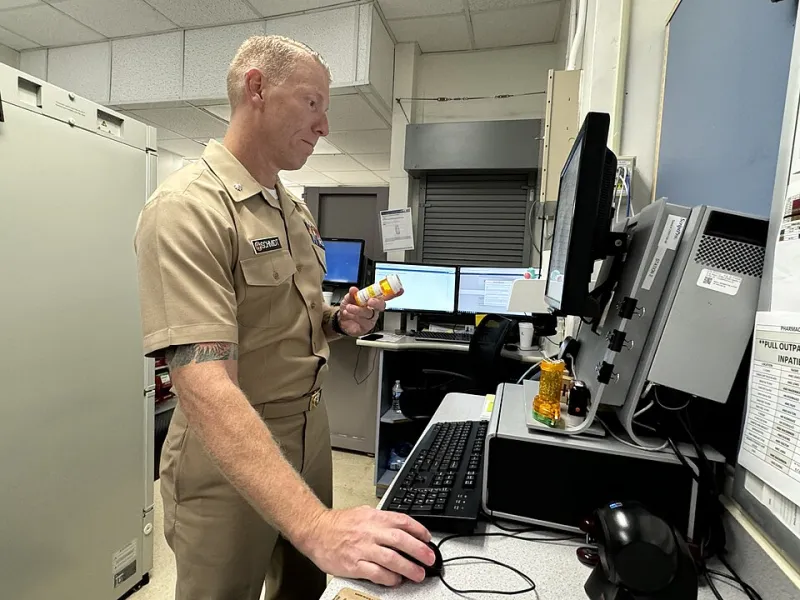
Photo: Navy Medicine from Washington, DC, USA, Public domain, via Wikimedia Commons
Somewhere between the pharmacy counter and the pharmaceutical company's boardroom, there exists a financial safety net that most American patients never find. It is not hidden by design, exactly—but it is not promoted with any urgency either. Patient assistance programs, or PAPs, are manufacturer-sponsored initiatives that provide brand-name and specialty medications at dramatically reduced costs, often for as little as one dollar per month or entirely free of charge.
The National Alliance on Mental Illness estimates that more than 1,200 such programs exist across the United States, collectively covering thousands of medications. Yet surveys consistently show that fewer than one in five eligible patients has ever used one. The reasons for this gap are worth examining—and so are the practical steps for closing it.
What Patient Assistance Programs Actually Are
A patient assistance program is a formal initiative operated directly by a pharmaceutical manufacturer. These programs are distinct from pharmacy discount cards, government subsidies, or insurer copay adjustments. They represent a direct financial arrangement between the company that makes the drug and the patient who needs it.
Manufacturers fund PAPs for a combination of reasons. Corporate social responsibility commitments, tax considerations, and the strategic goal of maintaining brand loyalty among patients who might otherwise switch to a competitor or go without treatment all play a role. Whatever the motivation, the outcome for qualifying patients can be transformative.
Some programs provide medications at a fixed nominal cost—commonly cited examples include Eli Lilly's Insulin Value Program, which capped monthly out-of-pocket costs at $35 for its insulin products, and Pfizer's RxPathways program, which covers dozens of the company's branded medications for eligible patients. Others provide medications entirely free of charge, with the manufacturer shipping directly to the patient's home or physician's office.
Why Your Doctor and Pharmacist Probably Haven't Mentioned It
This is the question that frustrates consumer advocates most: if these programs exist and cover so many medications, why aren't patients routinely informed about them?
The answer involves several overlapping factors. Pharmacists, particularly those working in high-volume retail settings, process hundreds of transactions daily. Their role at the point of sale is dispensing and counseling on drug interactions and dosage—not conducting a benefits eligibility assessment for every customer. Many are simply unaware of the full landscape of available programs, or lack the time to investigate individual cases.
Physicians face a similar constraint. While some medical practices employ staff dedicated to benefits navigation, the majority do not. A 2019 survey published in the Journal of Oncology Practice found that oncologists—specialists who regularly prescribe extraordinarily expensive medications—reported low confidence in their knowledge of available assistance programs.
There is also a structural disincentive. Pharmacies earn dispensing fees and margin on prescriptions they fill. A patient who obtains medication directly through a manufacturer assistance program may not run that transaction through the pharmacy at all, reducing the pharmacy's revenue from that prescription.
None of this means that your healthcare providers are acting in bad faith. It does mean that the responsibility for discovering these programs often falls to the patient.
Who Qualifies, and for Which Medications?
Eligibility criteria vary by program, but several factors appear consistently across the majority of PAPs.
Income thresholds are the most common qualifier. Many programs use federal poverty level guidelines as a benchmark, with eligibility typically extending to individuals and families earning between 200% and 400% of the federal poverty level. For a single-person household in 2024, that translates to an annual income range of roughly $29,000 to $58,000. Some programs set the threshold higher, particularly for high-cost specialty medications.
Insurance status is frequently a consideration, though not always a disqualifier. Many programs are specifically designed for uninsured or underinsured patients—those who have coverage but face high deductibles, coinsurance, or formulary exclusions. Some programs also offer copay assistance to commercially insured patients, though these are generally not available to individuals enrolled in Medicare or Medicaid due to federal anti-kickback regulations.
Diagnosis requirements apply in some cases. Certain manufacturer programs are condition-specific, meaning the medication must be prescribed for a particular indication to qualify for assistance.
Medications covered by PAPs span a wide therapeutic range, including treatments for diabetes, cardiovascular disease, mental health conditions, autoimmune disorders, and oncology. Specialty biologics—which can carry monthly list prices exceeding $10,000—are frequently included, making PAPs especially valuable for patients managing complex chronic conditions.
A Framework for Finding Programs for Your Specific Medications
Locating the right program requires a systematic approach. Here is a practical sequence to follow.
Start with the manufacturer's website. Every major pharmaceutical company maintains a patient support section on its corporate or brand-specific website. Search for the drug's brand name followed by terms such as "patient assistance," "support program," or "savings card." The program's eligibility criteria, application instructions, and contact information are typically listed there.
Use a centralized PAP database. Several nonprofit and government-affiliated organizations maintain searchable databases of patient assistance programs. NeedyMeds (needymeds.org) and RxAssist (rxassist.org) are two of the most comprehensive and regularly updated resources available. The Medicare Extra Help program and state pharmaceutical assistance programs are also catalogued on these platforms for eligible seniors.
Contact the manufacturer's patient support line directly. Many pharmaceutical companies operate dedicated phone lines staffed by benefits counselors who can walk applicants through eligibility assessment and the application process in real time. These calls are free, and counselors are often able to expedite applications for patients in urgent financial need.
Ask your physician's office for help with documentation. Most PAP applications require a physician's signature, a prescription, and documentation of income—such as a recent tax return or pay stubs. Alerting your doctor's office early in the process ensures that the required paperwork is prepared promptly and does not delay your access to medication.
Work with a patient advocate if the process feels overwhelming. Organizations such as the Patient Advocate Foundation and the HealthWell Foundation offer free navigation assistance for patients who need help identifying and applying for assistance programs. Hospital social workers are also a frequently underutilized resource in this space.
What to Expect After You Apply
Processing times vary. Some programs can approve applications and ship medication within a few business days; others may take several weeks. During the waiting period, ask your prescriber whether samples are available to bridge any gap in your treatment.
Once enrolled, most programs require annual recertification. Mark your renewal date on your calendar and begin the reapplication process at least 60 days before your current enrollment period expires to avoid any interruption in coverage.
The Larger Picture
Patient assistance programs are not a perfect solution to the broader problem of prescription drug affordability in the United States. They are administered at the manufacturer's discretion, their eligibility criteria can change without notice, and they are not designed to replace systemic policy reform. However, for the millions of Americans who fall into the gap between adequate insurance coverage and the ability to pay full retail prices, they represent a meaningful and underutilized resource.
At USaverX, our mission is to connect consumers with every legitimate savings opportunity available to them. Understanding patient assistance programs is one of the most powerful steps an informed healthcare consumer can take—and it begins simply with knowing they exist.